
Understanding Low Back Pain
- Meilan Daguman

- Feb 19
- 3 min read
Updated: Mar 3
Many patients try chiropractic care, medications, injections, or even physical therapy but may not achieve 100% relief. The reason people cannot fully recover from back pain is inflammation.
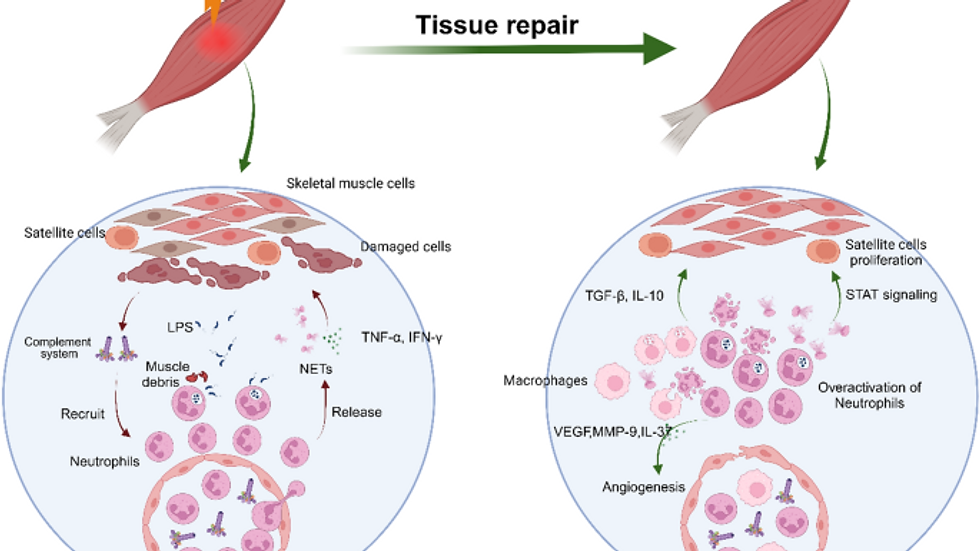
Inflammation and Pain: How the Body Repairs a Muscle Injury
When a muscle is injured—whether from lifting something heavy, sudden twisting, overuse, or poor posture—your body immediately activates a highly organized repair system. Pain and inflammation are not random events. They are part of a protective and healing response. Understanding this process helps explain why back pain can feel intense—and why proper recovery takes time.
Phase 1: Immediate Response (Inflammation Begins)
Within minutes of a muscle injury:
Tiny muscle fibers tear (microtears).
Small blood vessels may rupture.
The immune system is activated.
The body releases inflammatory chemicals such as:
Prostaglandins
Cytokines
Bradykinin
Substance P
These chemicals serve several purposes:
Increase blood flow to the area
Recruit immune cells
Remove damaged tissue
Trigger pain signals
Why Does It Hurt?
Pain occurs because inflammation lowers the threshold of nearby nerve endings (nociceptors). This makes the injured area more sensitive—even light movement can feel painful. This sensitivity is protective. It prevents you from overusing the injured muscle while it heals.
Phase 2: Cleanup and Protection
Within the first 24–72 hours:
White blood cells (especially macrophages) enter the injured area.
They remove damaged muscle fibers.
Swelling may occur.
The muscle may feel tight or spasm.
Muscle spasm is the body’s way of stabilizing the injured area. Although uncomfortable, it acts as a temporary protective brace.
Phase 3: Repair and Regeneration
After the initial inflammatory phase, the body shifts toward rebuilding. Specialized cells called satellite cells activate. These cells:
Multiply
Differentiate into new muscle fibers
Help repair damaged tissue
At the same time:
Collagen is produced
New blood vessels form
Tissue strength gradually improves
This phase can last days to weeks, depending on the severity of the injury.
Phase 4: Remodeling and Strengthening
In the final phase:
Muscle fibers reorganize
Scar tissue matures
Strength gradually returns
Gentle, guided movement during this phase is crucial. Too little movement can cause stiffness and weakness. Too much strain too early can re-injure the tissue.
Why Inflammation Is Necessary But Can Become a Problem
Inflammation is essential for healing. However:
Excessive inflammation can prolong pain.
Chronic inflammation may sensitize nerves.
Repeated injury without full recovery can lead to persistent pain.
In some individuals, the nervous system becomes overly sensitive—meaning pain may continue even after tissue healing.
Supporting Muscle Healing
To support the body’s natural repair process:
Allow brief rest in the acute phase (not prolonged bed rest).
Use heat after the first 48 hours to improve circulation.
Begin gentle mobility exercises early.
Gradually strengthen core and surrounding muscles.
Maintain good nutrition and hydration.
Manage stress and sleep well.
Healing is an active process—movement helps signal proper tissue remodeling.

A Different Approach: StemWave Therapy
StemWave uses focused acoustic wave technology to stimulate the body’s own regenerative response. It is designed to activate cellular repair at the site of injury—without surgery, injections, or long-term medication use. At Nippon Clinic, we offer advanced non-invasive treatment options such as StemWave therapy to help patients heal naturally.

How StemWave Works
StemWave therapy helps by:
Increasing local blood circulation.
Stimulating stem cell activity.
Reducing chronic inflammation.
Breaking down scar tissue.
Promoting tissue regeneration.
The acoustic waves trigger a biological response that “wakes up” dormant healing cells. This encourages the body to repair damaged muscle, tendon, and ligament tissue more effectively. Rather than simply blocking pain signals, StemWave addresses the underlying cause.
Benefits of StemWave for Low Back Pain
Patients may experience:
Reduced pain.
Improved mobility.
Faster recovery.
Enhanced tissue healing.
Minimal downtime.
No anesthesia or surgical risk.
Most treatments are completed in a short office visit, and patients can typically return to normal activity the same day.

Healing, Not Just Temporary Relief
Low back pain is common—but it does not have to become permanent. At Nippon Clinic, our goal is to provide comprehensive care that combines movement therapy, lifestyle guidance, and advanced regenerative treatments like StemWave to support long-term healing.
If you are struggling with persistent low back pain and want a non-surgical option that promotes natural recovery, we are here to help.
📍 Visit us at www.nipponclinic.vegas 📞 Schedule a consultation to learn whether StemWave therapy is right for you.
Your back pain may be common—but your recovery can be exceptional.


Comments